- By: focei
- Oct 30
- Comments (0)

The Foundation for Community Empowerment Initiative Monday urged the Gombe State Government to domesticate and implement a Youth Policy that reflects the unique realities and aspirations of young people in the state.

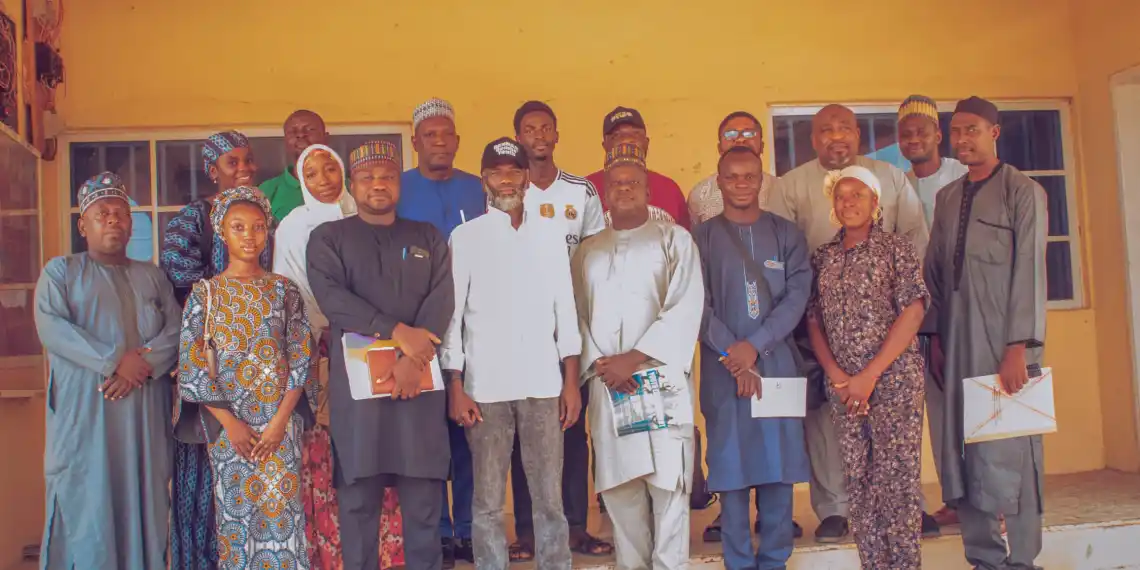
Delivering an advocacy message to the Commissioner for Youth and Sports Development, FOCEI Team Lead, Benjamin Maina, described young people as the state’s greatest asset but lamented that they continue to be weighed down by unemployment, exclusion from governance, and social vices.


“The youth of Gombe State are our greatest asset. They represent energy, creativity, and the future of this state. Yet, many of them face daunting challenges—unemployment, limited opportunities for skills development, exclusion from governance, and exposure to social vices such as drug abuse,” Maina said.
He explained that FOCEI, with support from the Nigeria Youth Futures Fund (NYFF), LEAP Africa, Ford Foundation, and MacArthur Foundation, is implementing a project titled ‘Empowering Youth to Drive Youth Policy Implementation for Inclusive Governance in Gombe State.’
According to him, the push for a Youth Policy is not a mere bureaucratic exercise but a step toward securing the state’s future. “We believe this is not just a policy exercise; it is about securing the future of Gombe State,” he stressed.
Maina emphasised that a domesticated Youth Policy would expand opportunities for skills acquisition, innovation, and entrepreneurship, strengthen youth inclusion in governance and decision-making, and help tackle pressing issues such as drug abuse, insecurity, and social exclusion. He appealed to the Commissioner for leadership and partnership in driving the process.
“The Ministry is the natural driver of this process, and your support will be pivotal. We are seeking your leadership and partnership in making this vision a reality,” he said.

Maina urged the Ministry to use its influence to table the policy before the State Executive Council, convene stakeholders for consensus-building, provide technical guidance, endorse the campaign publicly, and ensure that the eventual policy translates into concrete action backed by budgetary allocations.
“If we act boldly and work together, Gombe State can become a model for youth inclusion in Nigeria. This policy will not only empower our youth but also position the state as a beacon of innovation, peace, and progress,” he said.
Reaffirming FOCEI’s readiness to collaborate, Maina added, “FOCEI and its partners stand ready to provide technical support, mobilise civil society, and coordinate community engagement, but this initiative will only succeed with the Ministry’s full endorsement and leadership.”
He concluded with a call to action: “Your Honour, the time is now. Let us work hand in hand to empower the youth of Gombe—because when we invest in them, we invest in the future of this State.”
Responding, the Commissioner for Youth and Sports Development, Adamu Inuwa, welcomed the advocacy team, assuring that the government is committed to youth empowerment. “We are doing our best to see how best to empower our youths because they are important,” he said.
Highlighting the link between unemployment and restiveness, the Commissioner added, “You can’t separate restiveness from unemployment. These two go side by side, but we are working assiduously to support them, including through enabling laws.”
Also speaking, Chairman of the Gombe Network of Civil Society, Ibrahim Yusuf, commended the government for the ongoing recruitment exercise into the Gombe State Security, Traffic and Environmental Corps, where no fewer than 2,000 youths are expected to be employed. However, he cautioned against politicising the process.
“Sometimes, when such approval is given, a lot of politics is played; with slots distributed according to political offices and the citizens are left on their own,” Yusuf said.
Appealing on behalf of the civil society, he continued: “Ninety percent of us here are young people. We are calling for openness in the entire process. Let inclusivity be the driving force. Some of the youths into drugs are there because of the disconnect between elites and young people. There is no mentoring. With your commitment and leadership style, this can change.”
The Ministry’s Director of Administration and Finance, Mohammed Nura, also welcomed the partnership. “We welcome your partnership towards curbing challenges mitigating youths in the state. Our government is a functional one; we want to carry you people along,” he said.

During a follow-up session at the Ministry’s conference hall, the Director of Planning and Research, Bello Babayo, disclosed that the Youth Policy would be domesticated by the last quarter of the year.


“The youth policy will be domesticated by last quarter of 2025 in Gombe State,” Babayo said, noting that many youth associations had been actively involved in the process.


