- By: focei
- Oct 30
- Comments (0)

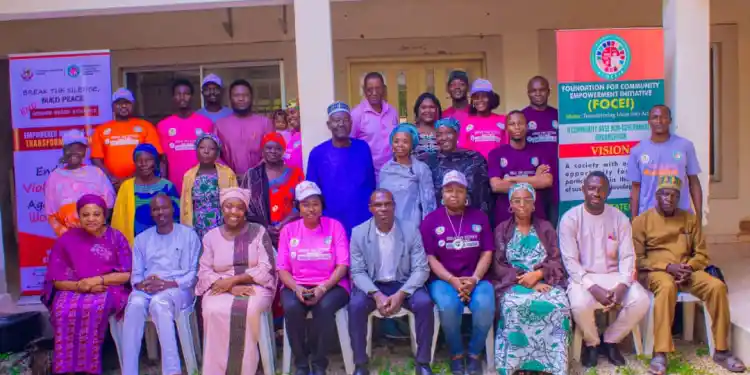
The Foundation for Community Empowerment Initiative, in collaboration with the Women Aid Collective, on Thursday convened a one-day stakeholder entry engagement meeting with church leaders and women fellowship coordinators in Gombe.


The meeting marked the launch of a two-year project focused on empowering Christian women and women leaders of culture for prevention and response to gender-based violence in Nigeria, through the strengthening of grassroots organisations.


PERISCOPE NIGERIA reports that the meeting brought together pastors, women leaders, and civil society actors, all of whom pledged to collaborate in promoting gender justice, peaceful families, and stronger community systems to eliminate gender-based violence in Gombe State.

Speaking during the session, the Team Lead of FOCEI, Benjamin Maina, said the engagement aimed to sensitise church leaders on identifying, preventing, and addressing GBV within their congregations.

“This initiative, supported by WACOL, a women-led human rights organisation, is designed to mobilise faith-based leaders and strengthen community response,” Maina explained. “Today’s meeting seeks their support and introduces our baseline findings and work plan for tackling GBV.”

Maina noted that while GBV is a widespread issue, it is often more pronounced within Christian homes due to the culture of silence.
“We discovered that silence is stronger among Christians,” he said. “You may recall the case of gospel singer Osinachi, who tragically lost her life due to domestic violence. Our intervention therefore focuses on Christian communities. We are implementing the project in Liji and Zambuk communities of Yamaltu Deba Local Government Area, Gombe State.”


Presenting findings from the baseline survey, the project’s Monitoring and Evaluation Officer, Yohanna Hassan, said the goal is to “Break the silence, build peace, and end gender-based violence.”

“Our data shows that more women than men are victims of GBV,” Hassan said. “To change this, we will build the capacity of Christian women leaders in advocacy, counselling, community mobilisation, and cultural engagement.”


The Gender Advisor of FOCEI, Asilina Pisaghi, emphasised that sensitising men is equally crucial to addressing the root causes of GBV.
“Men must be part of the conversation,” she said. “Without their awareness and commitment, efforts to curb gender-based violence will not succeed.”

Also speaking, Victoria Jashi, a women leader, urged parents to prioritise counselling and proper guidance for their children, especially before marriage. She warned against forced or arranged unions, describing them as a major cause of domestic crises.


“Marriage is for the mature,” Jashi said. “Parents must not impose partners on their children. A wedding lasts for hours, but marriage is for a lifetime. Proper counselling and understanding are essential before people get into union. We must also learn not to interfere unduly in our children’s marriages.”


