- By: focei
- Dec 28
- Comments (0)

GOMBE – Traditional rulers in two Gombe communities have encouraged women to speak out and champion against certain myths that inhibit their progress within the society.
The traditional rulers, however, advised that this should be done within the ambit of acceptable religious and traditional norms of their communities.
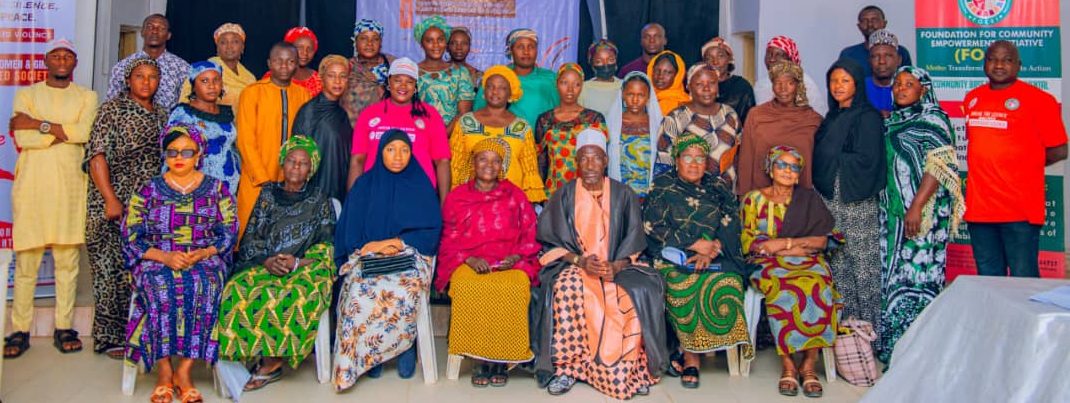
The two District Heads, Alhaji Ibrahim Usman of Zambuk and Abdulhameed Abubakar Aliyu of Liji, both in the Yamaltu-Deba Local Government Area of Gombe State, were part of a one-day multi-level dialogue and sensitisation workshop where they corroborated each other on the need for women to make all efforts to know their rights.
Foundation for Community Empowerment Initiative (FOCEI) in collaboration with Women Aid Collective (WACOL) organised the workshop that brought together stakeholders who included religious leaders, traditional leaders, women fellowships, women traditional title holders and partners, among others.
FOCEI is handling a two-year project with the title: “Empowering Christian Women and Women Leaders of Culture for Prevention and Response to Gender-Based Violence (GBV) in Nigeria, through the Strengthening of Grassroots Organisations”, aimed all stakeholders on board in mitigating the menace of GBV.
The women were particularly advised by the traditional rulers to mobilise themselves and meet the Gombe State Chief Judge, also a woman, who will give them adequate enlightenment on the rights of women as it relates to GBV.
They also made commitments towards creating an enabling environment for women to develop and attain their potential in life.
FOCEI Team Lead, Mr Benjamin Maina, had earlier enlightened the participants on the role of religious and traditional leaders in promoting gender justice by ensuring everyone has equal opportunities.
Several other topics were treated by various resource persons, which include: ‘Understanding GBV – types, causes and impacts within communities’, ‘Faith, Culture and Gender Equality – Rethinking Norms and Promoting Justice’, and also, ‘Legal Frameworks and Policy Provisions on GBV Prevention and Response in Nigeria’.
The participants were also taken on an interactive session that centred on ‘Barriers and Opportunities for Collaboration among Religious, Cultural and Government Stakeholders’.


